
Structure Reveals Voice
Why limits improve storytelling
People often talk about “finding their voice” as if it were a bird that might land on their shoulder if they wander through enough forests.
I have never seen it work that way.
Voice is not discovered in open space. Voice is revealed inside structure.
The longer I have worked as a performer and storyteller, the more convinced I am that limits are not the enemy of creativity. They are the condition that allows creativity to become visible.
When people struggle to express themselves on stage, on camera, or on the page, the problem is rarely a lack of talent. The problem is usually a lack of container.
Too much freedom produces drift.
Structure produces voice.
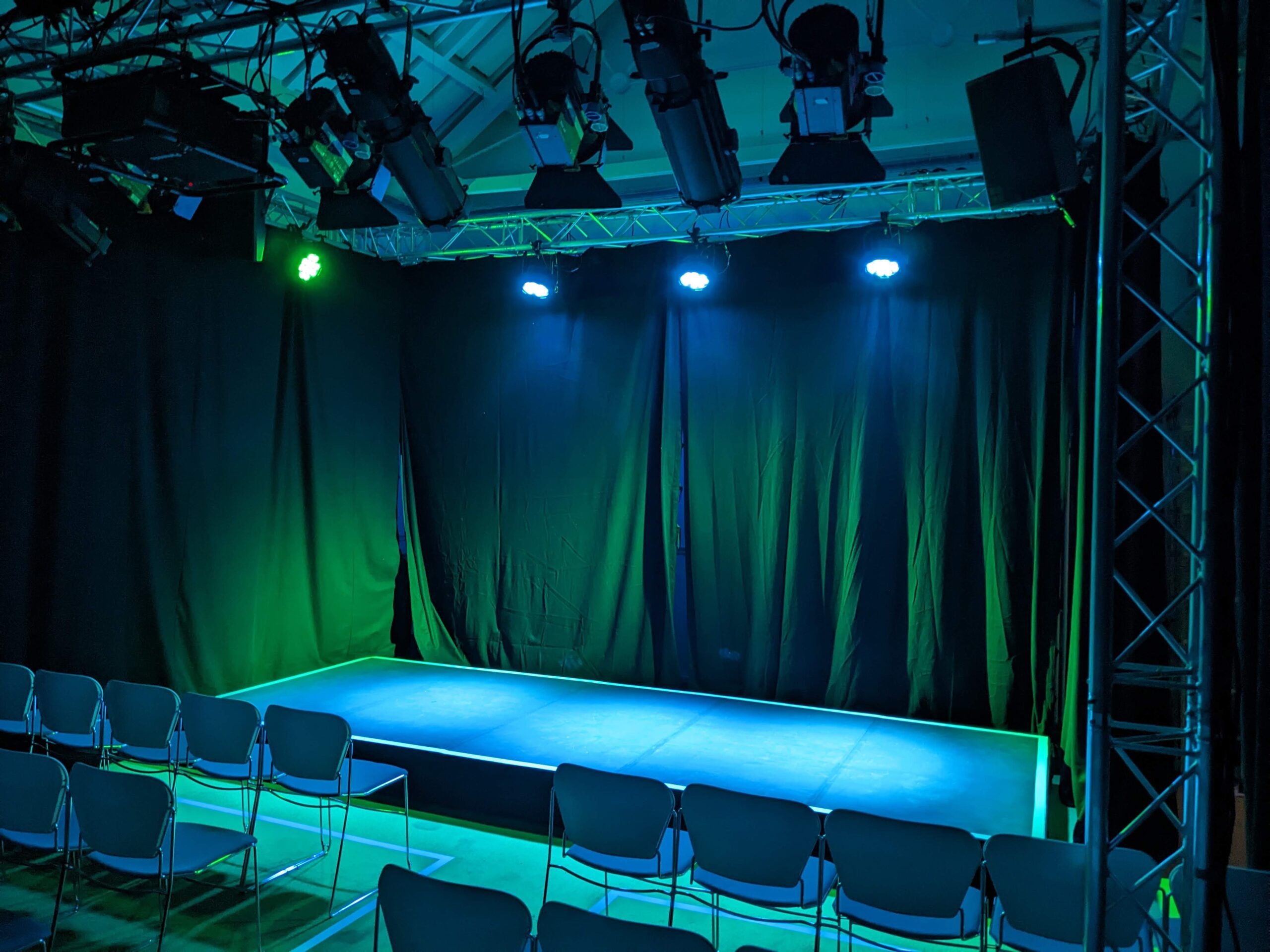
Every night in residency, I work inside a set of boundaries. The room has a certain size. The show has a certain length. The lighting changes at specific moments. The table is always there between me and the people who have come to sit.
Those limits do not restrict the work. They focus it.
Because the container is stable, the storytelling can deepen.
If you remove the container, the work floats.
Many creatives misunderstand this. They imagine that discipline will somehow make their work feel mechanical. In reality, discipline protects the conditions where depth can happen.
Think about the best stories you have heard.
They were not wandering.
They had shape.
They had timing.
They knew when to slow down and when to stop talking.
That is structure.
Good storytelling is not a flood of ideas. It is the careful arrangement of attention.
And attention requires limits.
A stage has edges. A book has chapters. A talk has a beginning, a middle, and an ending. Even conversation has an invisible architecture.
Once you begin to respect that architecture, your voice becomes clearer.
Because voice is not only what you say. It is how you choose to shape time for the people listening.
In my experience, the artists who grow the most are not the ones waiting for inspiration. They are the ones who decide to work within a rhythm.
A daily writing practice.
A weekly reflection.
A structured rehearsal schedule.
A commitment to showing up whether the mood arrives or not.
Commitment is a decision, not a mood. Structure is the evidence of that decision.
And once that decision is made, something interesting happens.
The mind relaxes.
Instead of constantly asking, What should I make? you begin asking better questions.
What belongs here?
What does this moment need?
What should be removed so the audience can feel the story more clearly?
Those are craft questions. And craft questions are what separate expression from noise.
Limits make those questions possible.
In storytelling, restraint is rarely a loss. It is usually a refinement.
A shorter story can land harder.
A quieter moment can carry more weight.
A deliberate pause can say more than a paragraph.
Structure teaches you where those moments live.
It teaches you to trust the rhythm of attention.
Over time, your voice becomes recognizable not because it is louder, but because it is more precise.
People feel when a storyteller understands how to shape space and time. It creates a sense of calm authority in the room.
Not performance for performance’s sake.
Presence.
That presence is what most audiences are actually looking for. Not spectacle. Not speed. Not endless novelty.
They want someone who knows where the story is going.
Structure makes that possible.
If you are a speaker, performer, or public creative trying to deepen your work, the most helpful question may not be How do I find my voice?
A better question is this.
What structure will allow my voice to emerge?
What boundaries will protect the work long enough for it to mature?
Because voice is not invented.
It is revealed through repetition, rhythm, and thoughtful constraint.
And once you begin building those containers for your work, something surprising happens.
The limits stop feeling like limits.
They begin to feel like the table where the real conversation can finally begin.
If that kind of work interests you, the door is always open. Pull up a chair when you are ready.