
Schedule the Sacred
People often ask how I keep showing up.
Night after night.
Table after table.
Story after story.
The question is usually framed as if the answer must be inspiration. As if somewhere backstage there is a hidden well of feeling that fills the cup every evening before the curtain rises.
There isn’t.
What there is, instead, is a schedule.
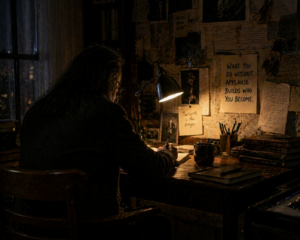
For the past several years I’ve worked inside a residency rhythm. Certain nights, at certain hours, the lamps are lit, the table is set, and people gather. The work happens whether I woke up feeling poetic or not.
This is not a complaint. It is a blessing.
Structure protects the sacred.
Many public creatives imagine that meaningful work must come from emotional readiness. That we should only step forward when the spirit moves us, when the words feel luminous, when the room inside us feels full.
But the truth is simpler and older than that.
The sacred does not arrive because we feel like it.
The sacred arrives because we prepared a place.
If you’ve ever sat at a real table with people waiting for you to begin, you understand this immediately. The audience has already made a commitment. They arranged childcare, drove across town, paid for the ticket, found the room.
They showed up.
Which means the artist must show up as well.
Mood is welcome. But it does not run the room.
Over time I’ve come to trust something that younger performers often resist, repetition is not the enemy of meaning. It is the doorway to it.
The residency schedule has taught me that depth grows inside rhythm.
The same room.
The same chair.
The same opening gesture.
These are not constraints. They are containers.
Inside those containers something remarkable happens. You stop asking whether the moment will be good. You begin discovering how good it can become.
Writers experience this with daily pages. Speakers discover it in regular rehearsal. Performers learn it through runs of shows that stretch across weeks and months.
At first the schedule feels mechanical.
Then, slowly, it becomes devotional.
A musician practices scales.
A Zen monk sweeps the same path each morning.
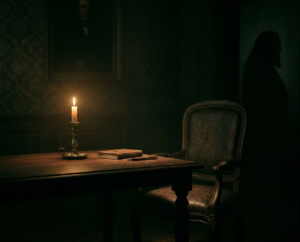
A storyteller lights the same candle before the first word.
None of these acts are dramatic. But they are sacred precisely because they are repeated.
When we schedule the work, we remove the negotiation.
The calendar makes the decision before the mood arrives.
This is particularly important for people who speak publicly or perform for others. Your audience deserves more than your best emotional day. They deserve your practiced presence.
Presence, like anything meaningful, is cultivated.
It grows through rehearsal. Through reflection. Through standing in the same place often enough that your nervous system finally learns to settle there.
You begin to understand the room before the room even fills.
You know how long a silence can live.
You know where the laugh will land.
You know which story the evening requires.
None of this comes from occasional inspiration.
It comes from returning.
Again.
And again.
And again.
The deeper irony is that once you build this rhythm, inspiration begins to visit more often. Not because you chased it, but because you made it welcome.
Artists sometimes imagine that scheduling the sacred will somehow diminish the magic.
My experience has been the opposite.
Magic prefers reliability.
If you want deeper work, give it a place to live.
Choose a day.
Choose an hour.
Choose the table where you will sit down and begin.
Protect that time the way you would protect a rehearsal space or a stage.
The calendar is not the enemy of creativity.
It is the doorway to devotion.
If you are someone who speaks, performs, teaches, or gathers people around your voice, this matters more than you think. Meaningful public work is not built on emotional weather.
It is built on rhythm.
And rhythm, fortunately, is something we can choose.
Schedule the sacred.
Light the lamp at the same hour.
Sit down, even when the mood has not arrived yet.
Very often, you’ll discover that the mood was simply waiting to see if you were serious.
If you are interested in building that kind of rhythm in your own work, there are ways we can explore it together.
Quietly.
Practically.
Across the table.