
This morning is warm and sunny … just a week ago we collected 31 inches of snow, and it’s gone, except for the icing on the peaks above us. The seasons roll, but the art work remains consistent. The meditation, the prep, the prayers.
The strange thing about repetition is that, eventually, it removes the drama.
Not all at once. There are still difficult mornings. Still the occasional hour where the work feels heavier than it did the week before. Still nights where the audience is tired, or distracted, or carrying something invisible into the room that changes the atmosphere before a word is spoken. But after enough days spent returning to the same table, enough years spent walking into rooms where something meaningful is expected of you, the constant internal negotiation begins to quiet down. You stop asking yourself whether you are the kind of person who does the work. The evidence has accumulated. The answer has already been given.
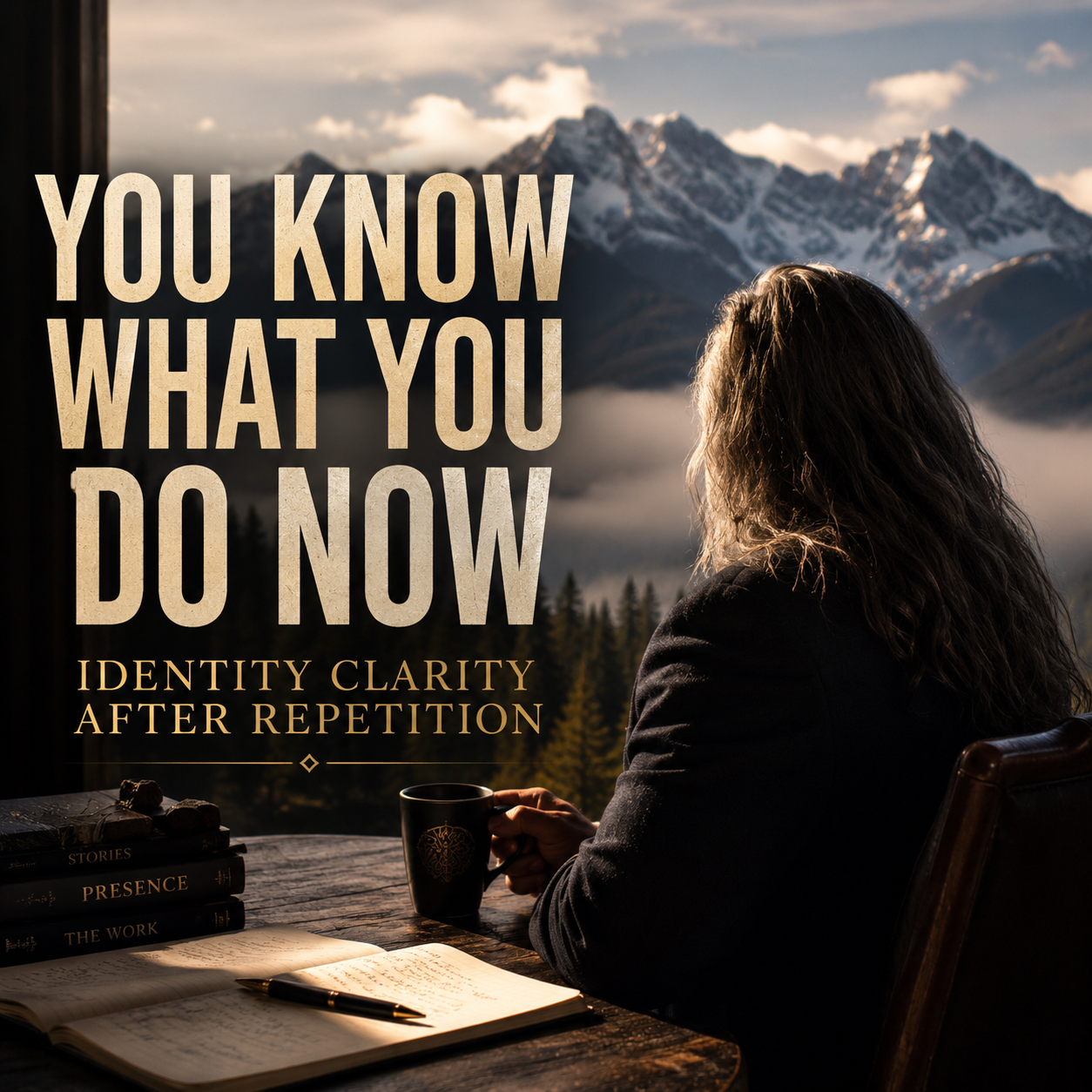
You know what you do now.
I have been thinking about that lately while looking out at the mountains beyond my office window, tea cooling beside a stack of notes that no longer need to impress me in order to matter. The work waiting on the table this morning is not glamorous. Some of it is unfinished. Some of it may never become what I originally intended. But there is less panic in that realization than there used to be. A strange steadiness arrives after repetition, not because you become fearless, but because you stop expecting clarity to arrive before movement.
There was a time I believed identity would feel more cinematic once it settled in. I thought certainty would arrive with trumpets. I assumed there would be a clean line between becoming and being. Instead, it happened quietly. Somewhere between loading props into the car after midnight performances, rewriting stories in hotel lobbies, answering emails while exhausted, standing in front of audiences while carrying private grief, and continuing anyway, the question dissolved. Not because the conditions improved, but because the returning became more trustworthy than the feeling.
That matters more than most people realize.
Public creatives often spend years trying to manufacture the perfect emotional state for meaningful work. They wait for alignment. For momentum. For confidence. For a clear schedule and uninterrupted mornings and the right kind of weather inside their own minds. But life does not organize itself around our preferred artistic conditions. The room changes. Energy shifts. The audience shifts. The culture shifts. Your body shifts. If your identity depends entirely on favorable circumstances, it will fracture every time friction enters the frame.
Integration asks something harder. It asks whether the work can survive contact with ordinary life.
Not as performance. Not as branding. As reality.
I have seen this most clearly at the table during the séance shows. There are evenings when the room feels electric before the first candle is lit. And there are evenings when people arrive guarded, skeptical, grieving, distracted, sunburned from vacation, irritated after dinner, half-present in their own lives. Years ago, I thought my responsibility was to force consistency onto the room, to somehow overpower the unevenness with technique. Now I understand something simpler. Presence is not control. Presence is remaining available without hardening.
That understanding did not arrive through inspiration. It arrived through repetition.
Through enough nights of doing the work while tired.
Through enough mornings of writing before certainty arrived.
Through enough seasons where the external rewards fluctuated while the internal responsibility remained.
There is a kind of relief hidden inside that. Not glamorous relief. Mature relief. The relief of no longer needing every day to feel important in order for it to matter. The relief of understanding that identity is not proven through intensity, but through return. Quietly. Repeatedly. Without demanding applause for the effort.
And perhaps this is why the work feels different now than it once did. Less like constructing a self, more like recognizing one. Less urgency around becoming interesting. More attention paid to becoming honest. The performance and the person have stopped arguing quite so much. What remains is smaller than ambition and somehow larger too, a willingness to continue carrying the work carefully into whatever room appears next.
The mountains are still outside the window tonight. The light has shifted blue against the trees. Somewhere, another audience is gathering. Somewhere else, someone is sitting at their own table wondering whether consistency counts when nobody seems to notice it yet.
It does.
May there be warmth in the room around you, and enough steadiness to continue.