
May 1, 2026
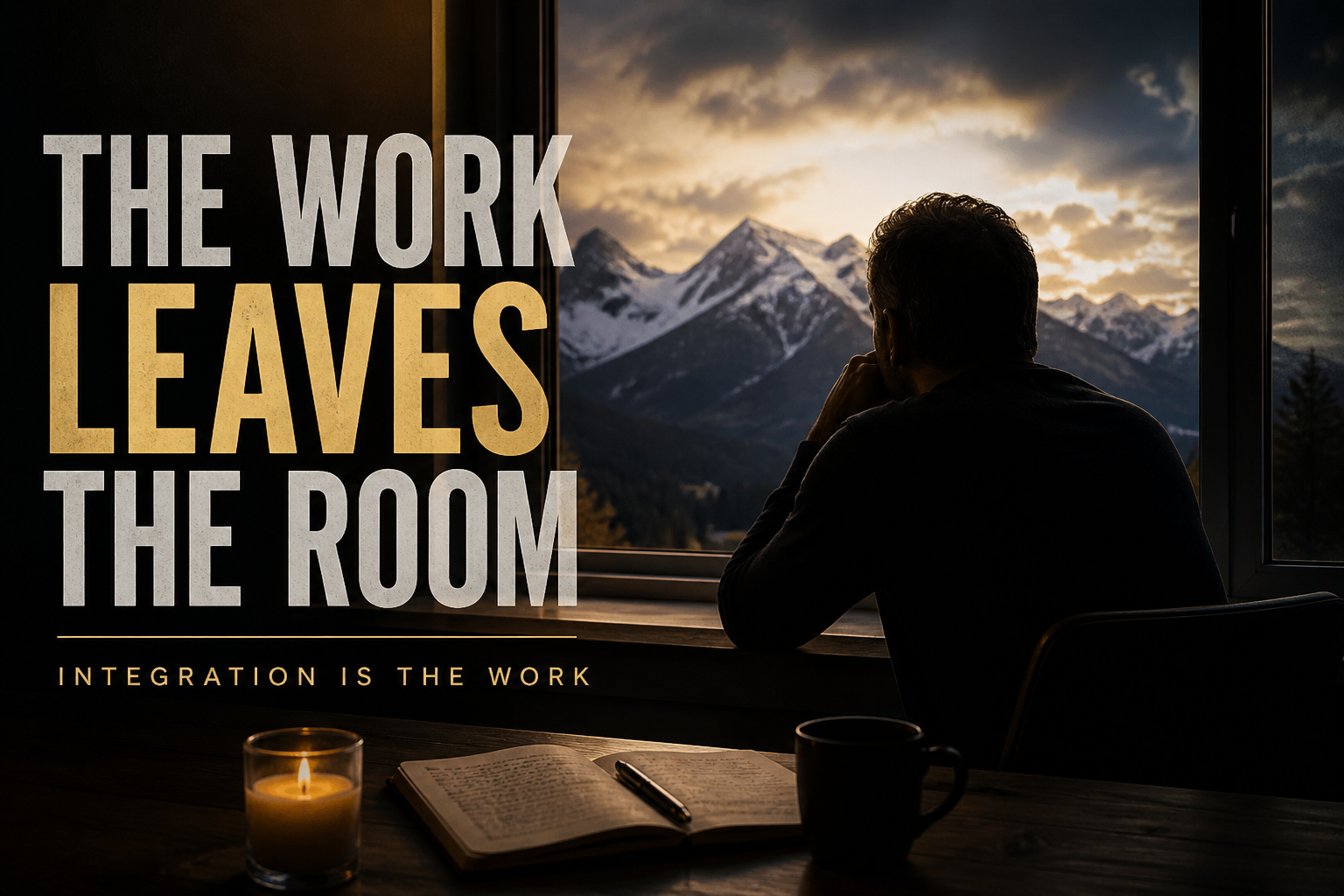
The work doesn’t feel different this morning, and that is how I know something has changed in a way that matters. There was a time when I needed the conditions to cooperate before I could begin, when I believed the right hour, the right energy, and a certain kind of quiet were not preferences but prerequisites. I treated that alignment as part of the craft itself, as though the work required a kind of ceremony before it would reveal itself. Sitting here now, at the table in my office, the Rocky Mountains holding their place in the distance with a patience I have not always had, I can feel the shift not in the environment but in my relationship to it. The mind is a little crowded, the body is not especially eager, and there are other things that could easily take precedence if I allowed them to, yet none of those registers as a reason to wait. The work has quietly relocated. It no longer lives on the far side of readiness.
For a long time, I kept the work inside a container, a defined space where things could be controlled, refined, and protected from interruption. That container served a purpose. It gave the practice a place to take shape, a place where repetition could occur without friction, and where identity could begin to form in a way that felt deliberate. But something subtle happens if the work never leaves that space. It begins to feel separate from life rather than part of it, something you visit when the conditions are right rather than something you carry into whatever conditions arise. Integration asks for a different posture altogether. It does not ask whether you can do the work when everything supports you, it asks whether the work can survive contact with the ordinary texture of your life, whether it can move with you into days that do not announce themselves as important, into rooms that were not prepared for it, into moments that do not pause to make space for your process.
This is the point where many people quietly stall, though they may not name it that way. Starting is no longer the problem, and even consistency in a controlled environment has been established, but the moment arrives when the work is no longer new, no longer energized by the novelty of beginning, and must instead be carried without ceremony. It is less exciting here, less visible, and it does not feel like progress in the way we have been trained to recognize progress, because there is nothing to point to except the fact that you continue. And yet, this is precisely where identity settles into something durable. Identity is not formed in the moments when everything aligns and supports you. It forms in the quieter, less flattering moments when nothing particularly does, when the conditions are neutral or slightly resistant, and you meet the standard you have set without negotiation.
There is a kind of dignity in that, though it is not the kind that announces itself or asks to be recognized. It accumulates slowly, almost imperceptibly, as you continue to meet the work in its ordinary form rather than waiting for it to appear in its most compelling one. Over time, that accumulation begins to register. You notice that you trust it, not in a dramatic way, but in a steady, grounded way that changes how you move through your days. You stop asking whether today is the right day, you stop checking whether the energy has arrived, and you stop waiting for the version of yourself that feels most prepared to appear. Instead, you work with what is present, bringing the same attention and the same care to a day that feels unremarkable as you would to one that feels significant, because you have come to understand that the work was never meant to belong only to the moments that felt meaningful. It was meant to make the moments meaningful by being present within them.
That is the shift that occurs, and it is both simple and difficult to accept. The work leaves the room, not because the room no longer matters, but because it has done what it was meant to do. It has shaped something in you that no longer depends on it, something that can move and remain intact even when the setting changes. When that realization settles in, you begin to see that there is no beginning again in the way you once imagined. There is only continuation. This moment, however it feels, is not separate from the work, it is the work, not a lesser version or a placeholder, but the real thing asking to be met without adjustment.
If you are willing to meet it that way, quietly and without the need to prove anything about it, something begins to stabilize beneath you. A way of operating that does not require permission, a standard that does not shift itself to match your mood, a presence that remains even when nothing is particularly calling for it. It is not louder, it is not more impressive, but it is more reliable, and because of that, it becomes something you can carry without effort.
And if you find yourself here today, in whatever condition the day has offered, still willing to meet it without negotiation, then you are closer than you think to something that will hold. I hope there is something steady in your hands, and something kind waiting for you where you are.