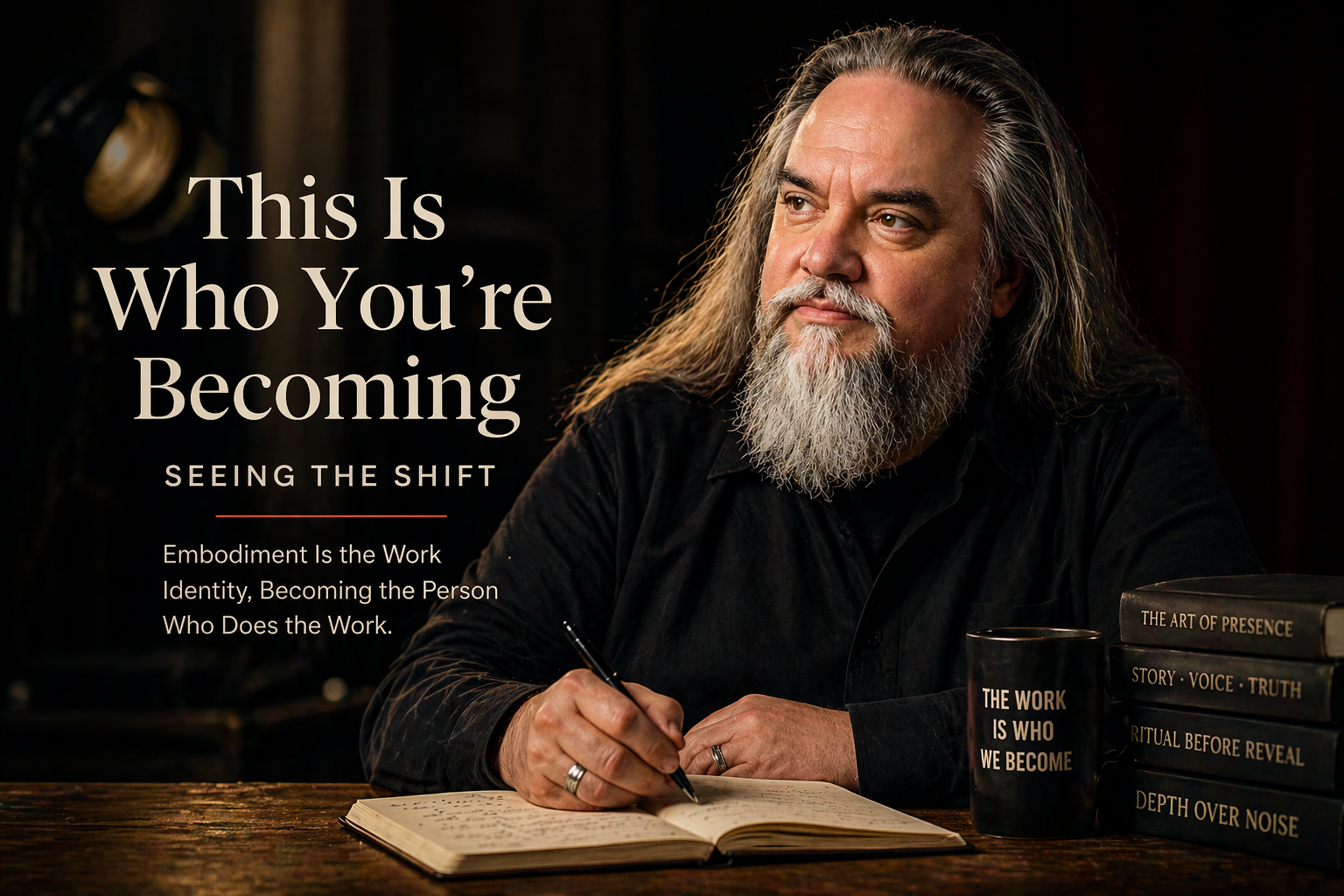

This Is Who You’re Becoming
Seeing the shift
There is a moment in any long practice when the work stops feeling like something you are trying to do and starts feeling like something you are quietly becoming. It does not arrive with ceremony. No one announces it. There is no clean line where before ends and after begins. It shows up in smaller ways. In how you sit down to begin without negotiating. In how you stay a little longer than you used to. In how the work no longer feels like an interruption to your life, but the structure that holds it.
Most people miss this moment because they are looking for evidence that feels louder. They are waiting for outcomes, for recognition, for some external confirmation that the effort has taken root. But identity does not form at the volume of applause. It forms in repetition, in the quiet accumulation of days where you kept your word to yourself. The shift is internal first. Subtle. Almost easy to dismiss if you are not paying attention.
As performers, speakers, storytellers, we are trained to notice the visible. We read rooms. We listen for response. We measure effectiveness by what returns to us. This is a useful skill on stage, but it can become a liability in the practice room. Because the most important transformation is not what the audience sees. It is what you are willing to do when there is no audience at all.
You begin to notice it in your standards. Not the standards you declare, but the ones you live by without thinking. The draft you would not have accepted a month ago now feels unfinished in your hands. The rehearsal you might have skipped becomes the part of the day that anchors everything else. You are no longer trying to be disciplined. You are behaving like someone who is.
This is where embodiment lives. Not in intensity, not in bursts of motivation, but in the steady, almost unremarkable consistency of action. It is less dramatic than most people expect, and far more powerful. Because once something is embodied, it no longer requires the same level of effort to sustain. It becomes part of how you move through the world.
There is a quiet danger here as well. When the shift is subtle, it is easy to overlook it and return to old narratives. To tell yourself you are still the person who struggles to begin, who needs the right conditions, who waits for clarity. But your behavior is already telling a different story. You are sitting down. You are staying. You are finishing. The evidence is there, but it asks for your attention rather than your excitement.
If you pause long enough to see it, something changes. Not in the work itself, but in your relationship to it. You begin to trust your own consistency. You rely less on mood and more on structure. You stop asking whether you feel like it and start asking whether it is time. This is not a loss of freedom. It is the beginning of it. Because when your actions are stable, your creative energy is no longer spent negotiating with yourself. It is available for the work.
And the work responds. Not all at once, and not always in ways that are immediately visible, but it deepens. Your voice becomes clearer, not because you forced it, but because you showed up often enough for it to emerge. Your presence becomes steadier, not because you chased confidence, but because you practiced being there.
So take a moment to look at what you are already doing. Not what you intend, not what you hope, but what you repeat. There is a pattern forming there. A shape. A direction. This is who you are becoming, whether you name it or not.
The invitation is simple. Stay close to that pattern. Protect it. Refine it where needed, but do not abandon it in search of something more exciting. There is depth here if you are willing to remain. And if you want company in that kind of work, there is a place for that as well.