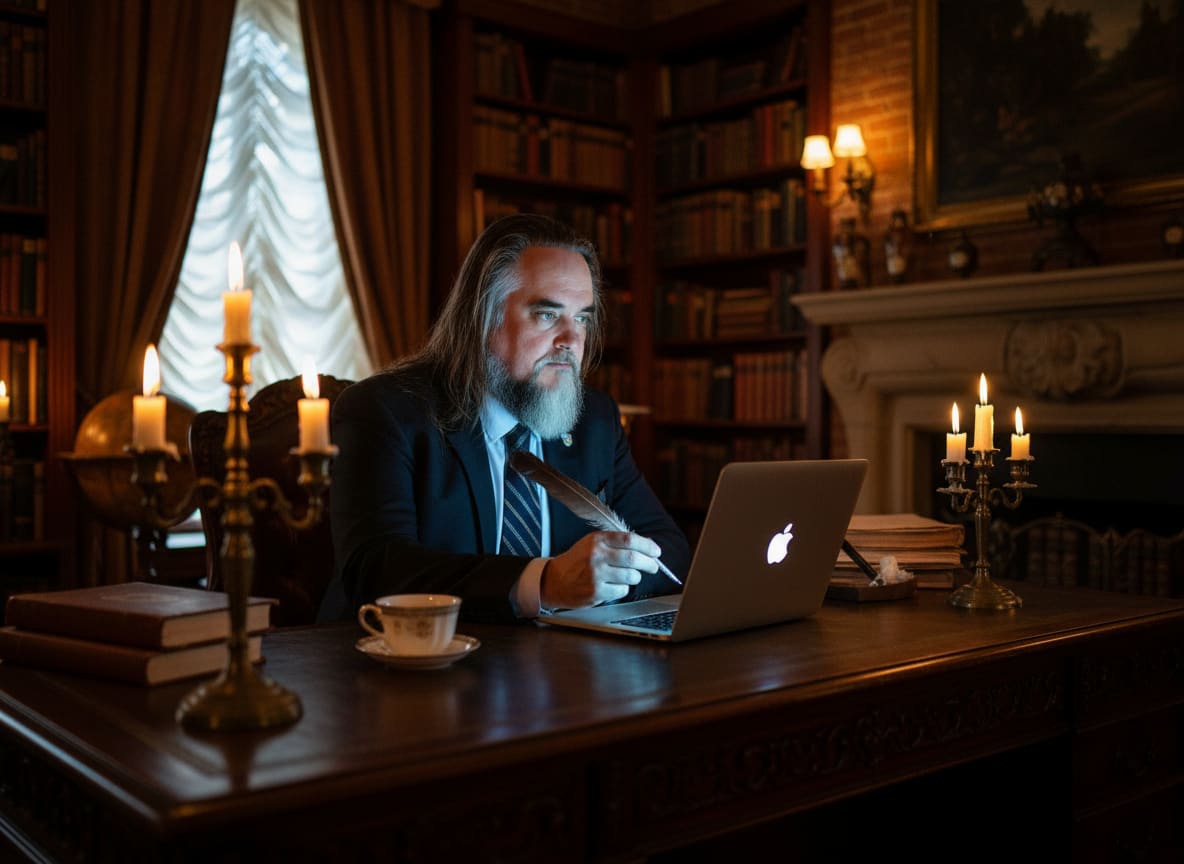

Translating stage presence to digital spaces
There is a particular hush that falls over a room when a performance is about to begin.
If you have ever sat across a table from someone who is truly present, you know the feeling. The conversation sharpens. The air seems to hold still for a moment. The small distractions of the day step politely into the hallway and wait their turn. On stage, we call this presence. In a séance room, we might call it an invitation. At the kitchen table, it is simply called listening.
For most of my life, I have practiced that hush in physical spaces. Night after night at the Stanley, seated across from strangers who quickly become participants, I rely on the same simple tools, breath, pacing, attention, intention. A story lands because it is offered carefully. A pause works because it is allowed to exist. A question matters because it is asked sincerely.
Then, one day, someone hands you a camera.
Or a microphone.
Or a blinking cursor.
And suddenly the room is gone.
At least, it feels that way.
Many performers assume they must become someone else online. Louder, perhaps. Faster. More animated. More algorithm friendly. The instinct is to translate performance into content by turning up the volume. Speak more quickly. Cut out the pauses. Smile more. Gesture bigger. Add music. Add captions. Add energy.
But the truth is much simpler than that.
The medium changes. The voice does not.
If you are thoughtful across the table, you can be thoughtful on YouTube. If you are wry in the wings, you can be wry on Instagram. If you know how to let a story breathe in the séance room, you can let a sentence breathe in a blog post. The same presence that holds attention in a dimly lit theatre can hold attention on a phone screen at ten thirty on a Tuesday night.
The work is not to become more interesting.
The work is to remain recognizable.
When someone attends one of my shows, they meet me in a very particular way. The pacing is unhurried. The humor arrives quietly. The invitation to wonder is sincere, not forced. The stories are not shouted at the audience, they are placed gently between us, across the table.
If that same person later finds me on TikTok, or reads an essay on Medium, or watches a five minute video on YouTube, they should meet the same host. Not a louder cousin. Not an anxious intern hired to chase metrics. The same person who lit the candle in the séance room should be the one who presses record.
Show up the same way everywhere.
This does not mean ignoring the differences between mediums. A blog post can wander more than a reel. A vlog can smile more easily than an email newsletter. A podcast may take the scenic route. But the underlying posture, curiosity, patience, humor, respect for the audience’s time, must remain intact.
Consistency of tone builds trust faster than consistency of schedule.
Your audience is not only learning what you do. They are learning who you are. Each platform is simply another room in which the same conversation is taking place. The lighting may be different. The chairs may be arranged differently. The door may open more quickly. But the host remains the same.
One voice.
Many rooms.
And always, someone sitting across from you.


